REba’s Meadow Cafe
By Susan CARROll
What’s in a name? In the case of Reba’s Meadow Cafe, it includes location, purpose, tribute, and history.
The Warming Hut and Reba’s Meadow Cafe are one and the same. Like the Warming Hut, Reba’s Meadow Cafe provides shelter in stormy weather, a welcoming atmosphere, and good food. But the name, Reba’s Meadow Cafe, goes a step further honoring Bear Valley’s toll road history, the importance of providing sustenance to travelers, and the women who worked beside the men developing this mountain town.
Eric Jung’s Bulls, Bears, and Highway Fares, A History of Bear Valley, Alpine County, California, spans geologic time to the making of the Bear Valley Ski Resort. Here, I focus on the late 1800s, acknowledging Jung’s book, the Calaveras County Historical Society, a few historic topography maps from the United States Geological Survey, and cemetery records as my information sources.
If you traveled to Bear Valley sometime between 1865 to 1910, you would have likely gone by horse or wagon and have paid Harvey Spaulding Blood at toll stations along the way. But not in winter, when the road was closed. Blood’s toll road was one of many vying to connect Nevada to Sacramento and was the primary route for silver miners, cattle and sheep herders, and the delivery of the mail, fresh produce and dry goods. It served hunters, anglers, and other tourists who enjoyed the outdoors. At the toll station, horses were rested, fed, watered, shoed, and if needed, received veterinary care. Saddles, wagons, and later autos could be repaired. Weary travelers ate, drank, replenished their supplies, talked about the weather and the condition of the road, and found a place to spend the night before continuing their journey the next day. Blood’s toll station wasn’t much different from Bear Valley today — minus the horses and wagons.
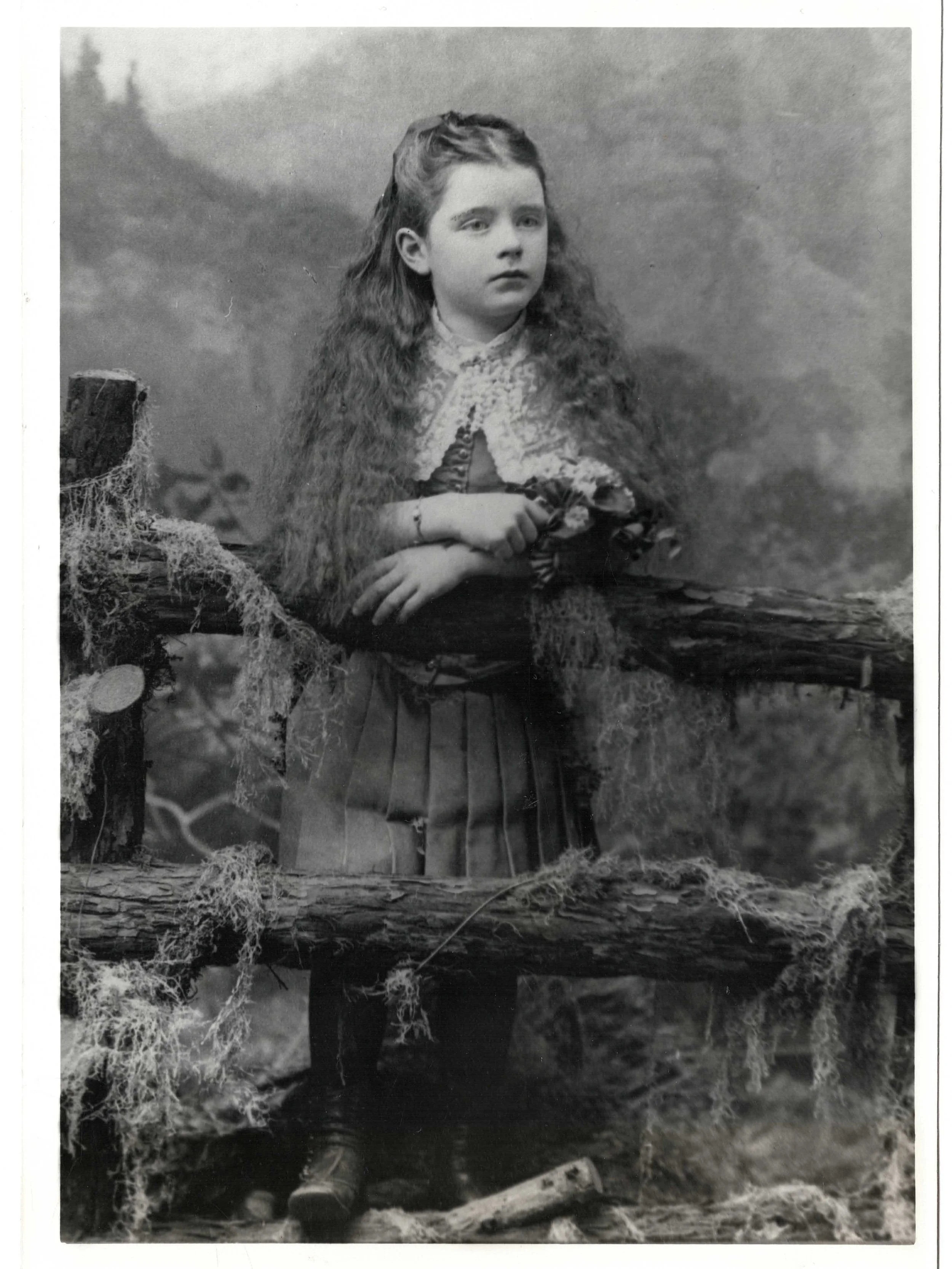
Harvey Blood married Elizabeth Gardner in 1876, and a year later Elizabeth gave birth to their only child and daughter, Rebecca, nicknamed Reba. Like most women from the era, we don’t know much about Reba, and even less about her mother. We know that Reba married twice, divorced once, widowed once, had three children, died in 1959 and was buried in the Altaville Protestant Cemetery in Angels Camp alongside her parents, second husband and son. Jung published two black and white photos of Reba archived by the Calaveras County Historical Society. In one photo she looks like she’s about ten-years old, casually resting on a rustic fence with mountain scenery in the background. She looks off in the distance with her long, waist-length curly hair pulled back from her face. In the second photo, she exudes the confidence of a young and respected woman, her long hair rolled into a fashionable bun, standing ready to take on the world, dressed to the nines. Look closely and see an engagement or wedding ring on her left hand.
Rumor has it that Reba Blood stole pies cooling from the kitchen windowsill – pies meant to be sold at the toll station – and gave them to the men surveying and mapping the local topography. In return for this bold move, which might have happened more than once, they named Mount Reba after her. A story retold by Ernest Fay and reported in the Calaveras Enterprise, date unknown. No one knows if this story is fact or fiction, but it makes a good story, maybe one that could have been written by Mark Twain. Which Reba raided the pies, the spunky ten-year old perhaps, surely not the confident young woman.
If the story about the pies is true, Reba was probably thirteen-years old or younger. Why thirteen or younger? Because the United States created a board to maintain geographic names in 1890. It seems reasonable that naming a mountain after a precocious girl who fed surveyors with stolen pies happened before the review board came into existence.
It’s possible that no pies were stolen, and that Harvey Spaulding Blood, a pillar of Calaveras County, submitted the name of his beloved child for the mountain to the US Board of Geographic Names sometime before he died in 1910, Reba then living in San Francisco. This possibility stems from the fact that early maps published in 1889 and 1890 clearly outline topography but do not name Mount Reba or any of the surrounding peaks. Mount Reba is not identified on published maps until 1947, when those early maps were updated. The hiatus between the publication of the maps suggests that Mount Reba was named sometime during those 50 years. The naming of Mount Reba, in this case, would be a story about the love one father had for his daughter.
Or maybe both happened. Imagine young Reba snatching a pie from the windowsill, racing towards the survey camp with her red hair flying behind her. Like her father, she would have been a tough negotiator. “What will you give me in exchange for this delicious meat pie?” The boss man, with a twinkle in his eyes, says “See that mountain, we will give you that mountain. Henceforth, it will be known as Mount Reba.” They shake on it and she gives him the pie. Years later, the toll road becomes a public highway; nature overtakes the toll station; and Harvey and Elizabeth resettle in Angels Camp. At some point the local name for the mountain becomes a geographic fact, with the help of her beloved father’s support. Just one more possibility.
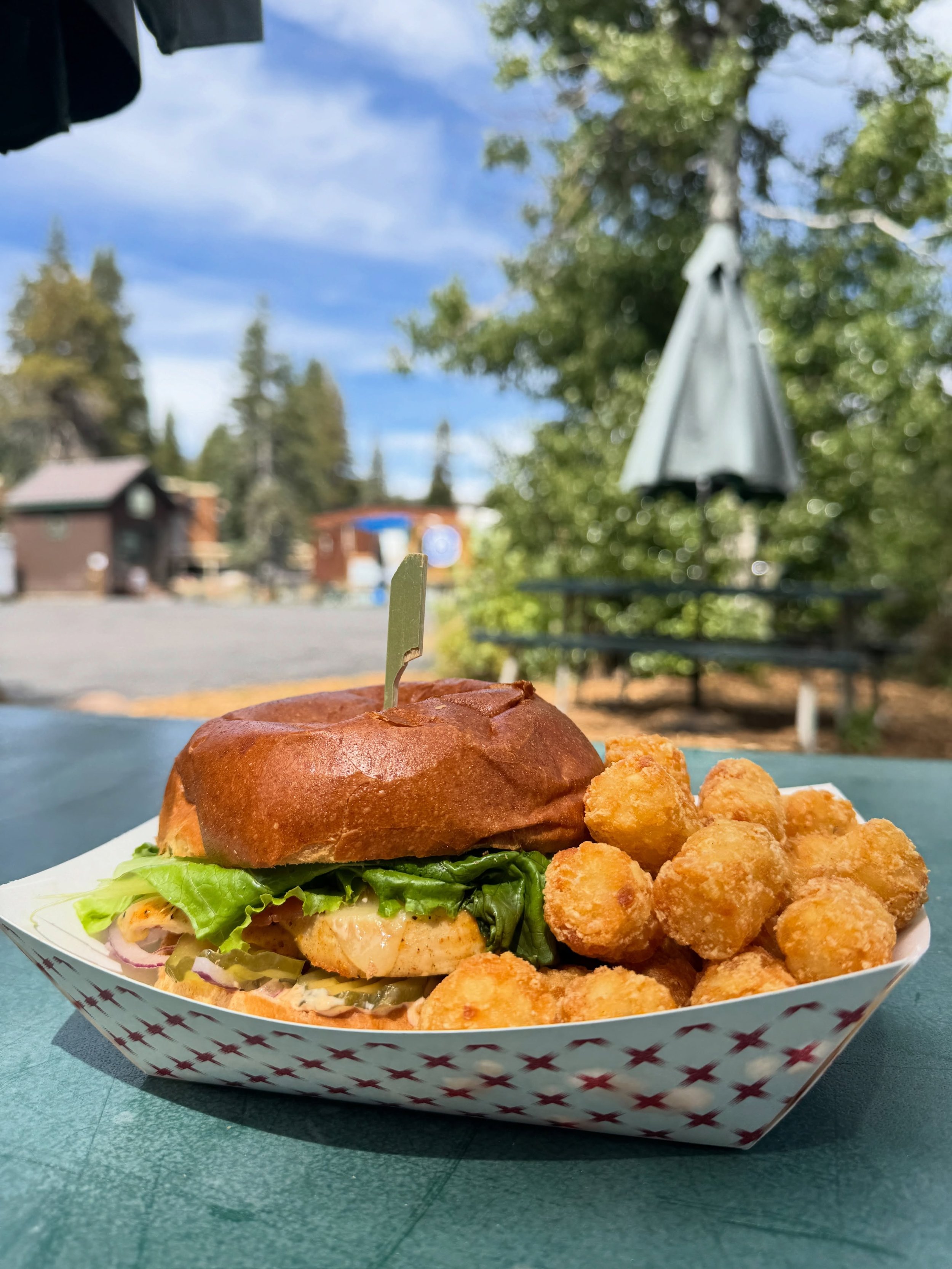
We know that Reba’s Meadow Cafe and Mount Reba are named for Rebecca Blood Grosse. That the toll station fed travelers who made their way across the Sierra Mountains when the road was open. That Reba’s Meadow Cafe, located among the meadow’s cross country trails, feeds today’s travelers who come to Bear Valley to play in the snow. And then, when the snow melts, Reba’s Toll House Cafe, a food truck in the Bear Valley Adventure Company parking lot, fuels summer adventures.
References
Find a Grave (https://www.findagrave.com/memorial/67942203/rebecca-grosse)
Historical topographic maps, preserving the past. United States Geological Survey (https://www.usgs.gov/programs/national-geospatial-program/historical-topographic-maps-preserving-past)
Jung, Eric (2004) Bulls, Bears, and Highway Fares, A History of Bear Valley, Alpine County, California
Photos of Reba Blood Grosse and Calaveras Enterprise article retelling the naming of Mount Reba courtesy of the Calaveras County Historical Society (https://www.historicalcalaveras.com/)
US Board on Geographic Names, United States Geological Survey (https://www.usgs.gov/us-board-on-geographic-names).
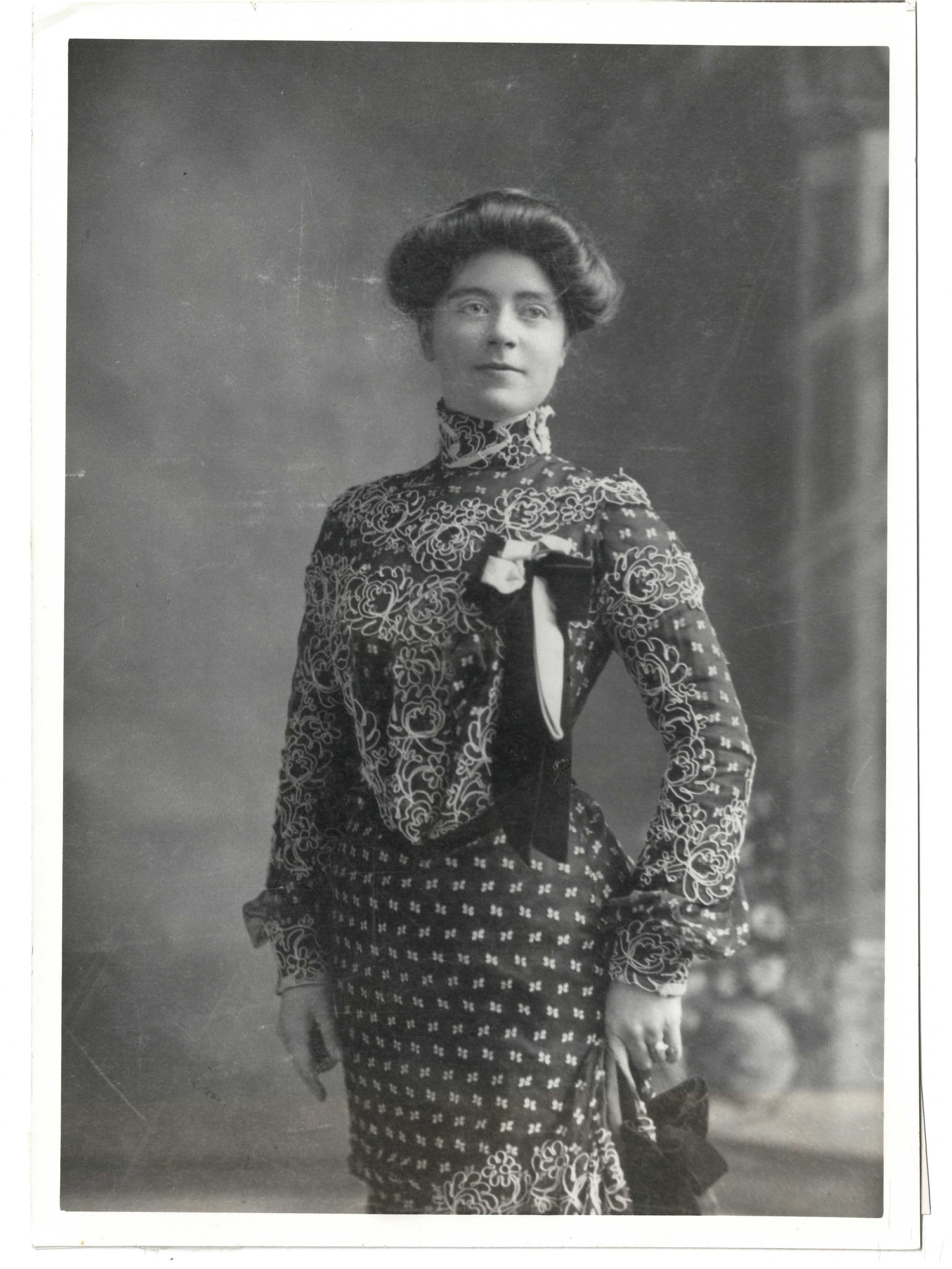
Reba Blood, age unknown, courtesy of the Calaveras County Historical Society
Click here to learn more about Project Warming Hut.